
Application deadline: 14 May 2026
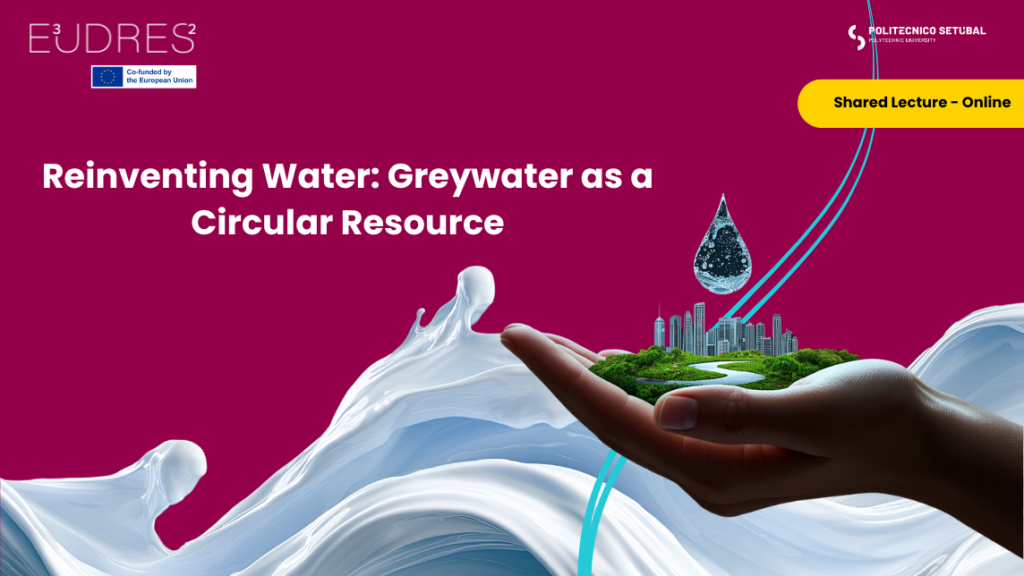
Greywater is lightly polluted household wastewater (from showers, baths, sinks, and laundry, excluding toilet wastewater). With appropriate simple treatment, greywater can be safely reused for non-potable purposes such as toilet flushing and irrigation. Replacing drinking-quality water for these everyday applications, households and communities can reduce demand on freshwater supplies, which is increasingly important in a climate change and water scarcity scenario. Greywater reuse thus strengthens local water resilience and offers a practical, decentralised approach to sustainable water management.
Details
Course Content
Lecture Topics:
1. Greywater reuse in the climate change context.
2. Drivers, opportunities, and limitations for greywater reuse, environmental and economic benefits, and key social, regulatory and technical barriers.
3. Governance of greywater management: policy frameworks, legislation, and regulation. Greywater quality requirements and risk-based standards for different uses.
4. Overview of greywater treatment technologies and performance considerations.
5. Design and operation of greywater reuse systems at building and neighbourhood scales.
6. Global perspectives and case studies on greywater reuse implementation across different climatic, socio-economic, and regulatory contexts.
Tutors
Carla Gamelas
Study Programme
Degree in Environmental and Marine Technologies
ECTS
0
Contact hours
90 minutes
Full/partial course
Single lecture
European Qualifications Framework (EQF)
EQF 6
Course ID
SL_IPS_4
Prerequisites
None
Further information
Teaching Methods
Lecture
Learning Outcomes
By the end of this lecture, students will be able to:
1. Define greywater (GW), identifying typical domestic sources and end uses.
2. Explain why GW reuse matters under climate change and water scarcity, linking it to resilience and circular-economy principles.
3. Identify key environmental and economic benefits of GW reuse.
4. Recognise the main barriers to implementation.
5. Outline the core elements of GW governance, including legislation, regulation and standards.
6. Compare GW treatment technologies in terms of purpose and performance.
7. Interpret a simple GW reuse system schematic, identifying key components.
8. Select an appropriate reuse application for a given context, justifying the choice based on the expected quality, risk, and feasibility.
9. Summarise global GW reuse scenarios and trends, explaining how local climate, regulation, and socio-economic factors shape adoption.
Assessment
None
Literature & Materials
Powerpoint presentation
Please note
Please be aware of the course timezone provided in the course description. Converting the course times to your timezone may be necessary to ensure your availability.